Savage / Stevens model 94
94B, 94C, 94BT, 107B,107C, 107BT
12, 16. 20, 28, gauge & 410
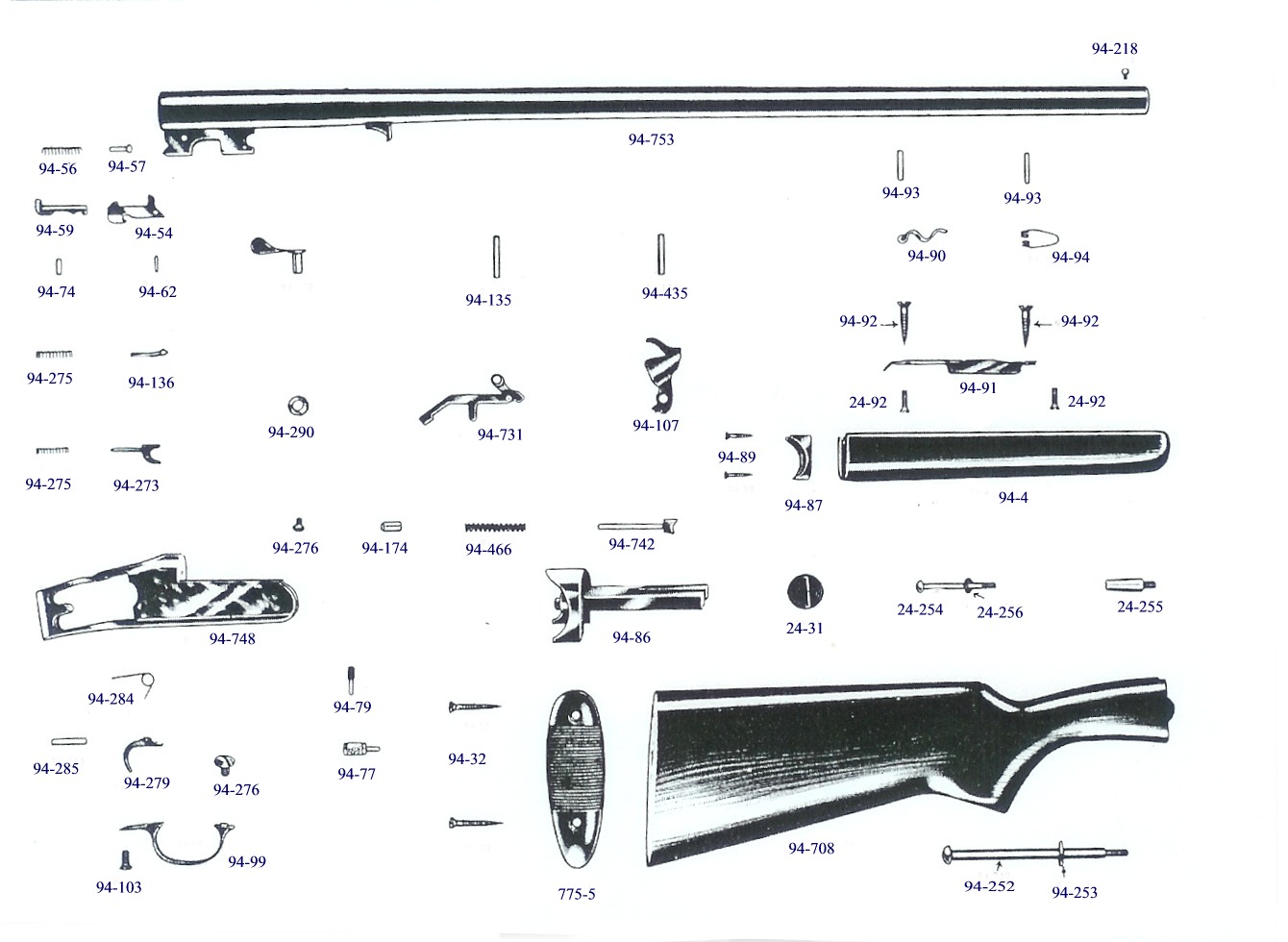
The illustration shown below was scanned off a Savage factory parts list, using factory reference numbers, which are converted to factory part numbers. This is important as about all obsolete parts suppliers use ONLY factory or closely associated numbers where ever possible so everyone is on the same page.
Note, for some of the older firearms,
many over 100 years old, the factories never used what we now know as assembly
drawings, but just views of many of the component parts & possibly randomly
placed
as seen below
|
The parts listed below are for your
identification purposes only. The author of this website DOES NOT have any parts. |
The illustrated parts shown here, are from original factory parts list of about 1950 & use factory party numbers
Yet, for all its history, Czech streets are no relic. In cities like Pilsen (birthplace of Pilsner beer), modern art installations share space with 19th-century breweries. Young entrepreneurs in Brno’s Špilberk Castle district blend tech innovation with traditional woodworking. This duality—where the past and future coexist without conflict—defines the soul of Czech streets. As you wander them, you’re not just traversing cobblestones; you’re walking through a nation’s heartbeat, where every step connects to centuries of art, resilience, and warmth.
Czech streets are defined by their textures. Cobblestones, some worn by centuries of foot traffic, give way to smooth pavement in newer areas, while narrow alleys lead to hidden courtyards where locals sip beer under fairy lights. The concept of "ulice" (street) in Czech culture isn’t just a geographic term—it’s a social artery. In Prague’s Vinohrady district, for example, art deco buildings house vintage shops and jazz clubs, where the clink of glasses and strum of a guitar spill onto the sidewalks. czech streets 7 full
The streets of Czech Republic are a living museum, where every cobblestone, archway, and corner tells a story. In cities like Prague, the capital, the Old Town (Staré Město) remains a labyrinth of Gothic spires, Baroque facades, and Renaissance gables, all preserved with meticulous care. The 14th-century Charles Bridge, flanked by statues of saints, serves as both a gateway and a backdrop to the city’s charm, with Vltava River lapping softly against its foundations. Here, the past is not just remembered—it breathes in everyday life, from the clatter of horse-drawn carriages to the scent of trdelník (a sweet pastry) wafting from street carts. Yet, for all its history, Czech streets are no relic
Festivals and markets transform these streets seasonally. Christmas markets in December fill plazas with the aroma of gingerbread and roasted chestnuts, while spring sees the blossoms of Prague’s Vrtba Garden casting pink shadows over the Charles Bridge. The Summer Beer Festival in September turns Wenceslas Square into a hub of Czech brews, where locals and tourists toast to tradition. These events reflect the Czechs’ deep connection to communal joy, where even the busiest street becomes a stage for celebration. This duality—where the past and future coexist without
Note that extractors for guns made prior to 1950 were
.435 wide at the top, while the later ones were .308.
C
opyright © 2005 - 2020
LeeRoy Wisner with credit given for original illustrations. All
Rights Reserved
Back to the Main Ramblings
Page
Originated 11-03-2005 Last updated
11-08-2020