I should consider that "swallowed" might be part of the story. Perhaps there was an incident where someone swallowed something, and the others were involved? The user is looking for the "best" information, so maybe the article should outline possible interpretations, provide steps to verify information, and suggest where to find more details.
Putting it all together, the user might be looking for information about an event that occurred on August 26, 2024, involving people named Tessa, Thomas, and Nicole. Maybe it's a viral story, a news event, or something from social media. However, without more context, it's challenging to determine the exact topic. swallowed240826tessathomasandnicoleluva best
But the user wrote it as one word: tessathomasandnicoleluva. Maybe they missed some spaces or there's a typo. Also, the user might be referring to a specific incident or story involving these names and a date. The date format is yymmdd, so 240826 would be August 26, 2024. I should consider that "swallowed" might be part
In conclusion, the article needs to address the possible interpretations of the query, explain the potential for misinformation, and guide readers on how to seek out credible sources. It's important to emphasize verifying facts through official channels and using critical thinking when encountering such topics online. Putting it all together, the user might be
Since there's no official information available about this specific combination of names and date, the article should caution readers against spreading unverified information. It's possible the user encountered a misleading headline or hoax and wants guidance on how to approach it.
First, the term "swallowed240826" looks like a random string of characters followed by a date, maybe October 26, 2024? Then there's "tessathomasandnicoleluva" which seems like two names: Tess, Thomas, and Nicole Luva. Maybe "Luva" is a typo for something else? Like "Love"? Maybe the intended term is "Tessa, Thomas, and Nicole Love".
I should also note that dates in mmddyy format can vary by region, so 240826 could be August 26 or October 26 depending on the format assumption. The article should mention this ambiguity.
As a global leading video surveillance manufacturer, Uniview dedicates to provide better products and better services for global distributors, system integrators and installers. JVSG, a developer of video surveillance tools and software, is professional on helping the project manager to quickly and effectively design the video surveillance system.
The software offers a new way to design modern video surveillance systems quickly and easily.
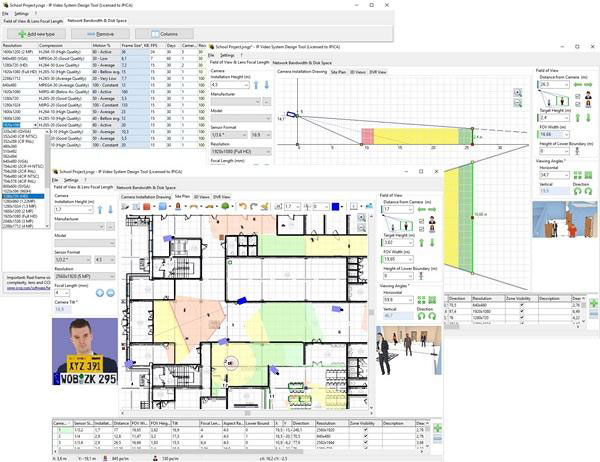
Increase efficiency of your security system while lowering costs finding the best camera locations
Calculate precise camera lens focal length and viewing angles in seconds
Check the field of view of each camera and find dead zones to increase the security level of your premises using 2D and 3D modeling
Load site plan / floor plan JPEG, PNG or BMP background images from Visio or Google Earth. Import AutoCAD DWG drawings (Pro) or backgrunds from PDF files
Print or export your project to PDF. Copy your calculations, drawings and 3D mockups to MS Word, Excel, Visio or other software to create an excellent project IP Video System Design Tool includes a field of view calculator, lens focal length, CCTV storage and bandwidth calculators, megapixel camera resolution calculator and many other CCTV tools so you can design a video surveillance system quickly, easily and professionally.
More detail product specific information and tutorial, please see the JVSG link
Download the latest version of the tool